
Sustainability in 2025 isn’t just a craze- it’s a must. With the rising demand for ethical options and purer methods, fashion labels are reviewing how clothes are created, peddled, and sported. One significant change driving this change? In addition to being innovative in terms of design, sublimation printing is also surprisingly environmentally friendly.
Gone are the days when “sustainable” implied flat basics. Today’s green-minded shoppers want clarity in how their apparels are created, explicit styles, and cheeky patterns. And with its vivid images, lasting durability, and far lower environmental effect than conventional techniques, sublimation is rising to the occasion.
Sublimation utilizes heat to transmit pigment into cloth fibers rather than layering ink on top. This innovative technology has various environmental benefits:
Traditional printing processes, such as screen printing, might need gallons of water for each garment. Sublimation? None. That tells of no dye-filled runoff debasing waterways or sapping precious resources.
There is no need for screens or stencils. Sublimation is based on digital printing, which guarantees precise numbers, fewer mistakes, and almost no wasted resources.
Sublimated prints are not only visually appealing but also long-lasting. Since the dye becomes part of the material, the prints don’t wither or crack. Clothes last longer, get worn more frequently, and are dumped out less, mowing down on landfill debris.
Polyester is used for the majority of sublimation printing, and recycled polyester is the fabric to look out for in 2025. Bottles and discarded textiles are examples of post-consumer plastic waste that is used to make rPET. Recycled polyester is utilized in sportswear, swimwear, loungewear, and streetwear collections due to its compatibility with sublimation and its beneficial environmental effect.
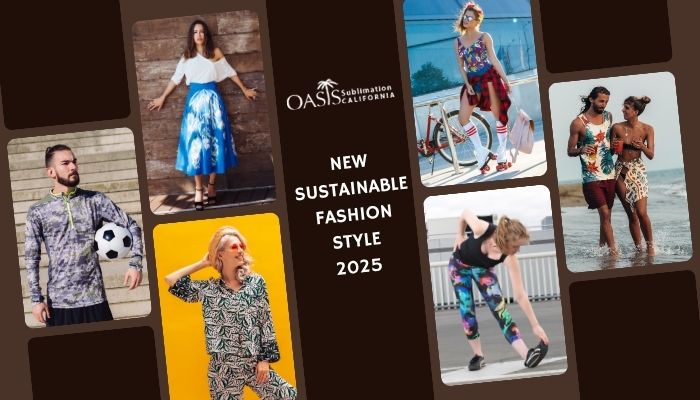
rPET is being used by brands in swimwear, leggings, sports bras, and more. Pieces that combine waterless printing and recycled cloth are not only fashionable but also considerably less harmful to the environment.
2025 is about more than simply fabrics and processes. In 2025, advances in sublimation inks and transfer processes will make the procedure even more environmentally friendly.
Nowadays, a large number of inks are certified by OEKO-TEX® or a comparable organization, indicating that they are safer for wearers and employees due to the absence of hazardous compounds.
Contemporary heat transfer systems employ quicker cycles and lower temperatures to produce rich, high-resolution prints with less energy use.
These changes assist fashion enterprises in meeting environmental criteria while maintaining quality and originality.
What makes sublimation so intriguing is how it promotes both environmental and design goals. Consider all-over patterns, vibrant color palettes, and highly customized options—all without the excess manufacturing and waste of typical collections.
In 2025, many conscientious businesses will abandon mass manufacturing in favor of made-to-order or pre-order releases. This solves the problem of unsold inventory and is fully compatible with sublimation’s low-waste method.
Capsule drops and limited-edition collections are popular, particularly when combined with sustainable methods. Sublimation enables marketers to experiment with striking patterns and themes in short, manageable runs.
In addition to altering their clothing production methods, eco-conscious brands are also being open about it. They are narrating the history of their packaging, printing method, and materials. Customers are listening.
Rethinking fulfillment and packing is another aspect of sustainability. Conscientious companies are fully committed to green logistics in 2025.
Plant-based and recycled paper mailers are replacing plastic polybags. These alternatives preserve clothing during transportation while decomposing organically.
Through local fulfillment facilities and carbon offset schemes, businesses are reducing their shipping footprint without sacrificing speed.
QR codes nowadays supersede hangtags, and invoices are emailed rather than printed, lowering waste and aligning with digital-first customer practices.
Business owners and retailers hoping to meet the booming market for sustainable fashion can profit by sourcing sublimated clothes from reliable manufacturers and suppliers who specialize in eco-conscious printing and recycled fabrics. Now’s the moment to print responsibly and usher in the next wave of green fashion.
Relevant Blog: Sublimation Clothing: The Future of Sustainable Polyester Fashion